As I already mentioned in my post Things to do in Singapore – the must sees, I always recommend joining a guided tour with local guides to get to know each place in more deeply. I did a tour of Chinatown in Singapore with Indie Singapore Tours, and I highly recommend them. I learnt so much, things that I wouldn’t be able to recall in full detail now!
Before your start exploring Chinatown, check out this map showing the area’s main attractions.
Alternatively, visit the Visitor Centre, located right in the heart of Chinatown, directly opposite one of its main attractions, the Buddha Tooth Relic Temple. At the Visitor Centre, you can pick up maps, ask for directions, or browse for small souvenirs.
If you’re arriving by MRT, take the blue or purple line to Chinatown station, and take the Pagoda Street exit. Here you’ll find the typical colourful shophouses, as well as plenty of souvenir shops.
Buddha Tooth Relic Temple
On the ground floor, you’ll find a vast hall with the impressive “Wall of 100 Dragons” at the far end and the striking golden statue of Buddha Maitreya. Religious ceremonies take place here, and with a little luck you may even hear Buddhist monks chanting. There are also smaller halls and corridors on this floor that are worth exploring.
The temple’s museum, displaying relics, artefacts and explanations about Buddhist tradition, is located on the mezzanine and third floors.
On the 4th floor is the famed relic itself, the tooth of Buddha, enshrined in a golden stupa.
I also recommend climbing up to the rooftop garden, which is accessible via stairs from the 4th floor and is a popular place for reflection and prayer. At its centre stands a large prayer wheel.
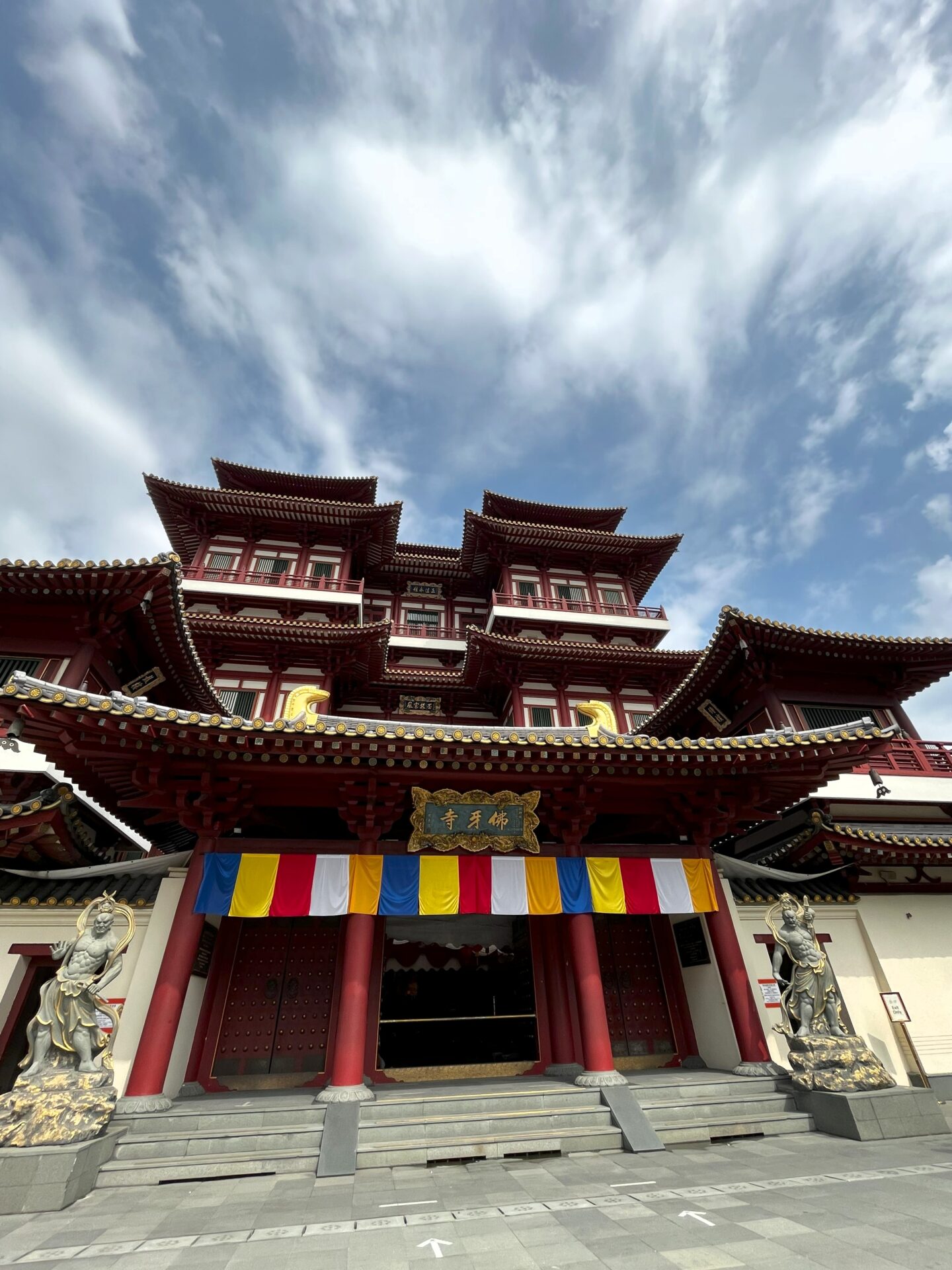
Photo 1: Buddha Tooth Relic Temple
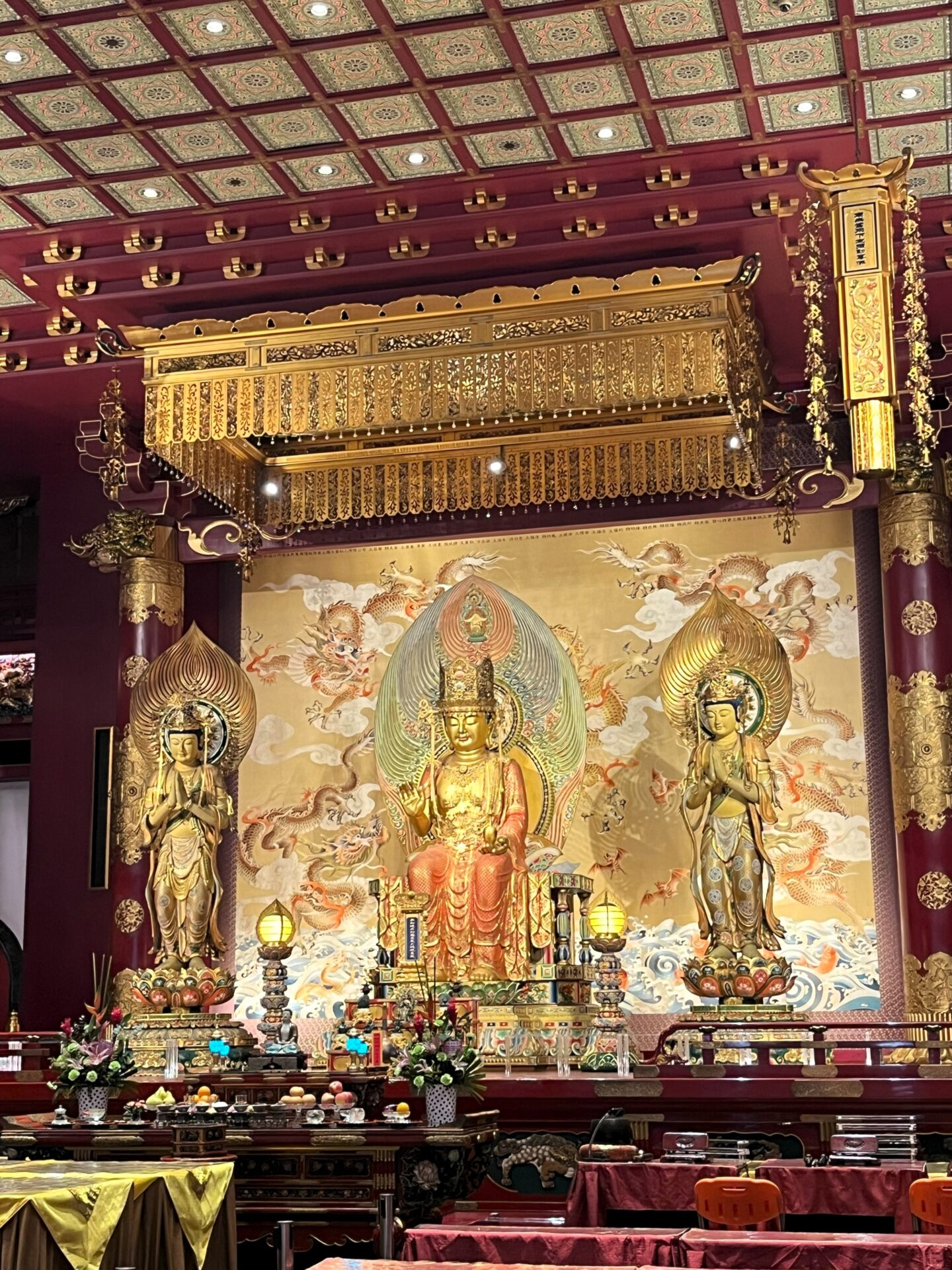
Photo 2: Buddha Tooth Relic Temple
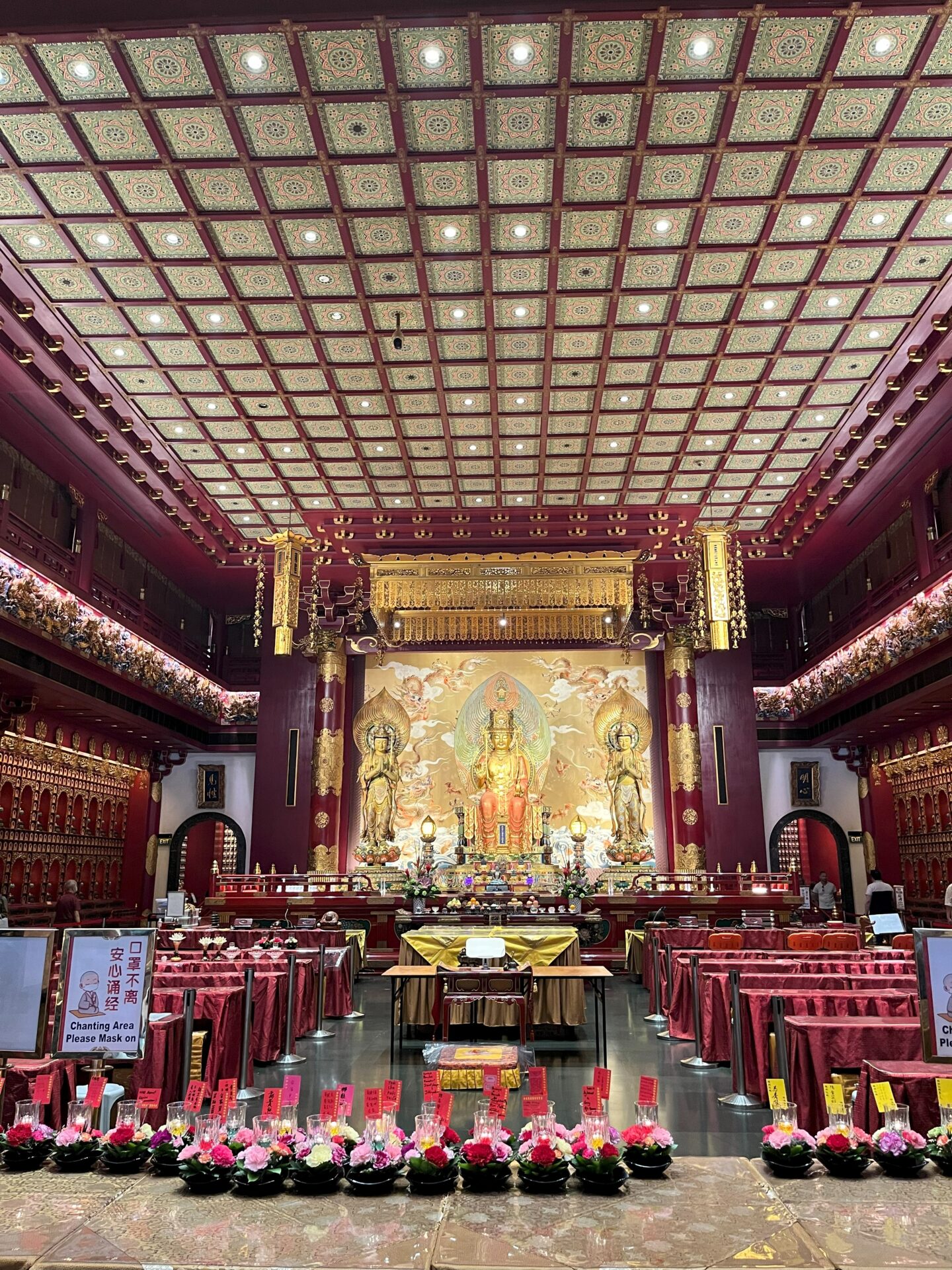
Photo 3: Buddha Tooth Relic Temple
Yip Yew Chong (YC) Murals
Local artist Yip Yew Chong is behind some of the most iconic murals at Chinatown in Singapore. His work can also be found in other parts of the city, including Arab Street and Everton Road.
The murals depict scenes of everyday life in Singapore, either from the artist’s own childhood or from earlier times. They offer a glimpse into the past, and I personally love every single one. They’re definitely worth seeking out. They’re also incredibly Instagrammable if you’re into that sort of thing.
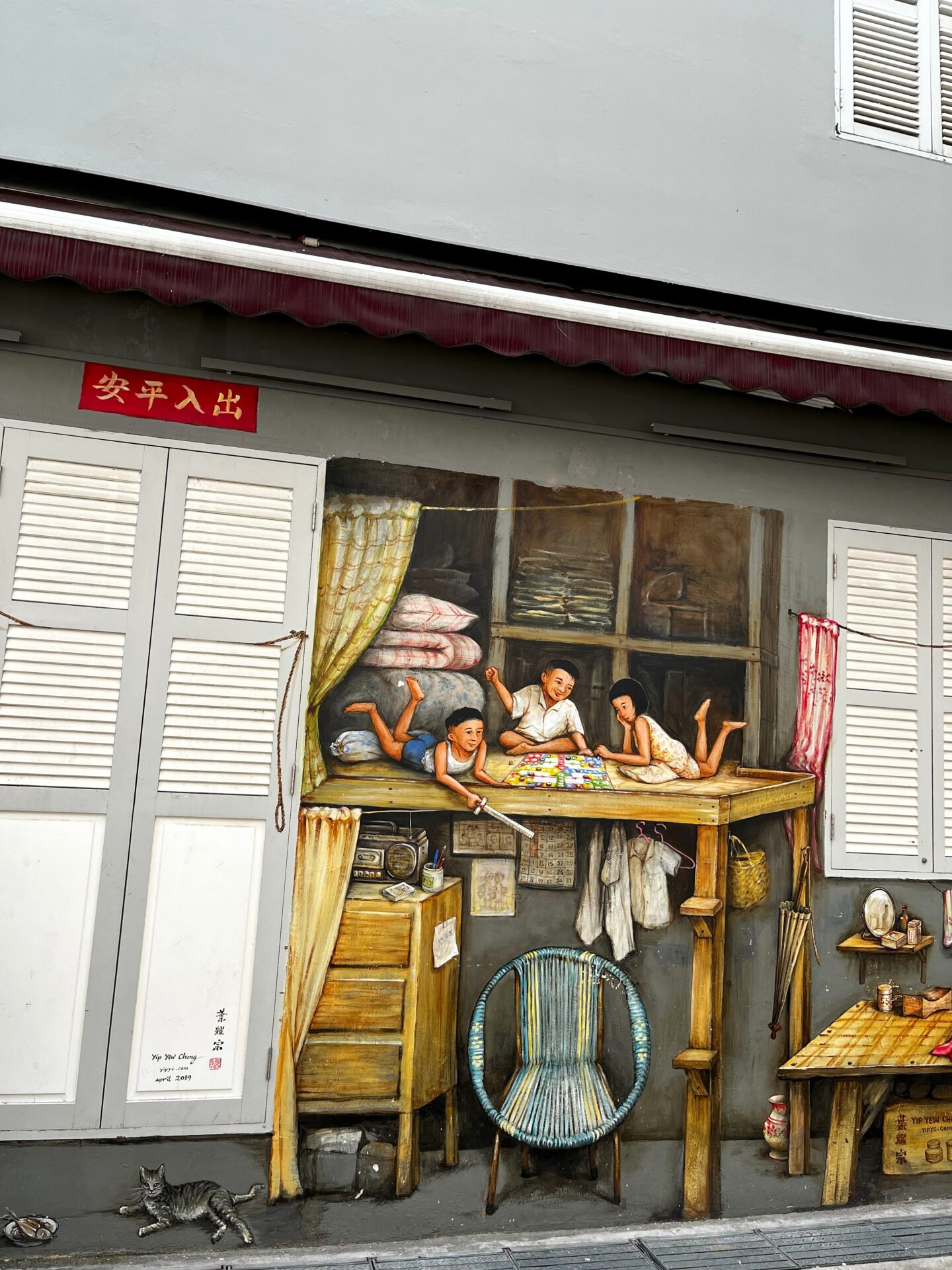
Photo 4: My Chinatown home
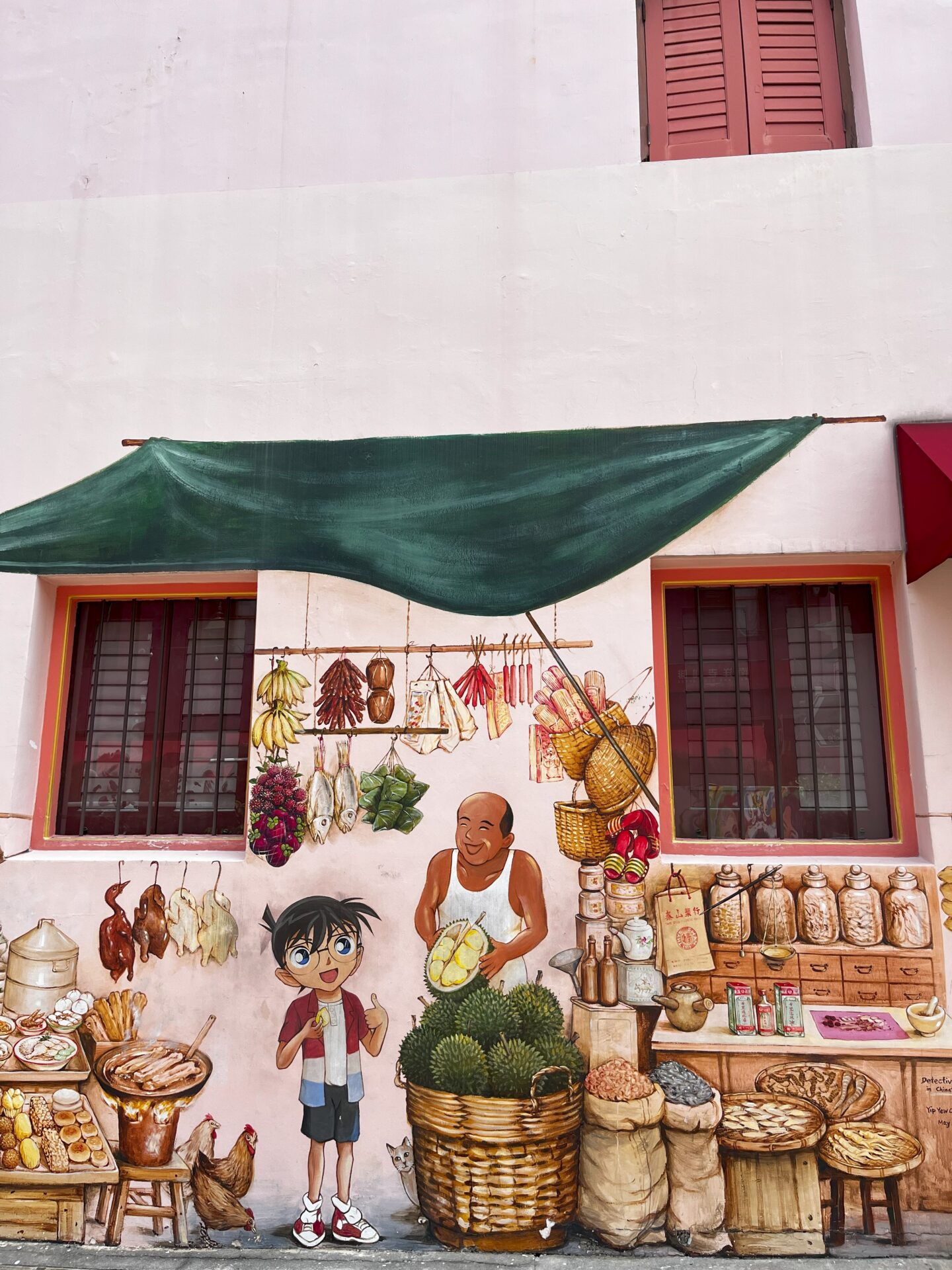
Photo 5: Detective Conan in Chinatown (Japanese manga universe)
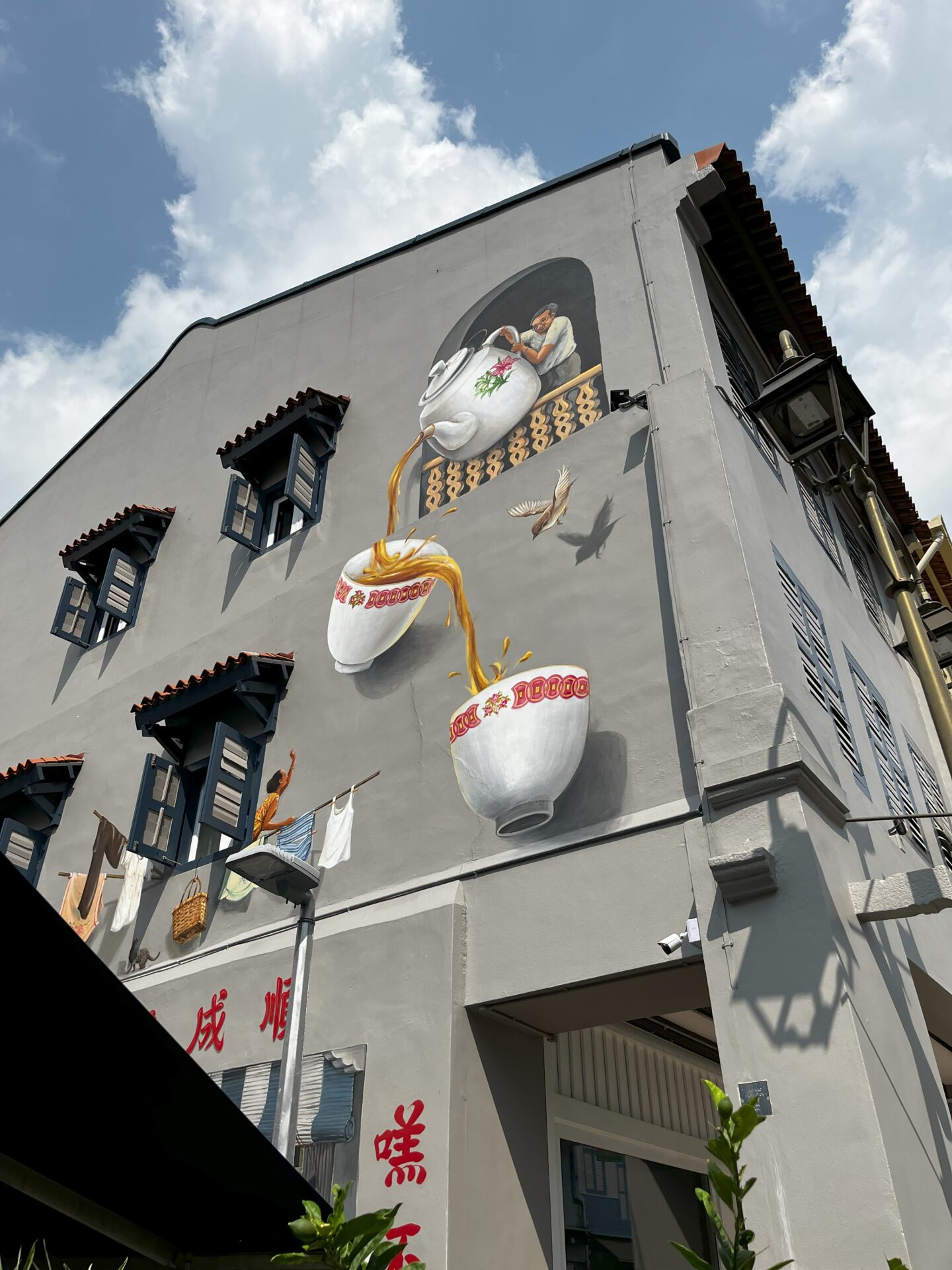
Photo 6: Chinatown market
You can find out more about the artist on his official website, where you can also access a map showing the exact locations of his murals across the city.
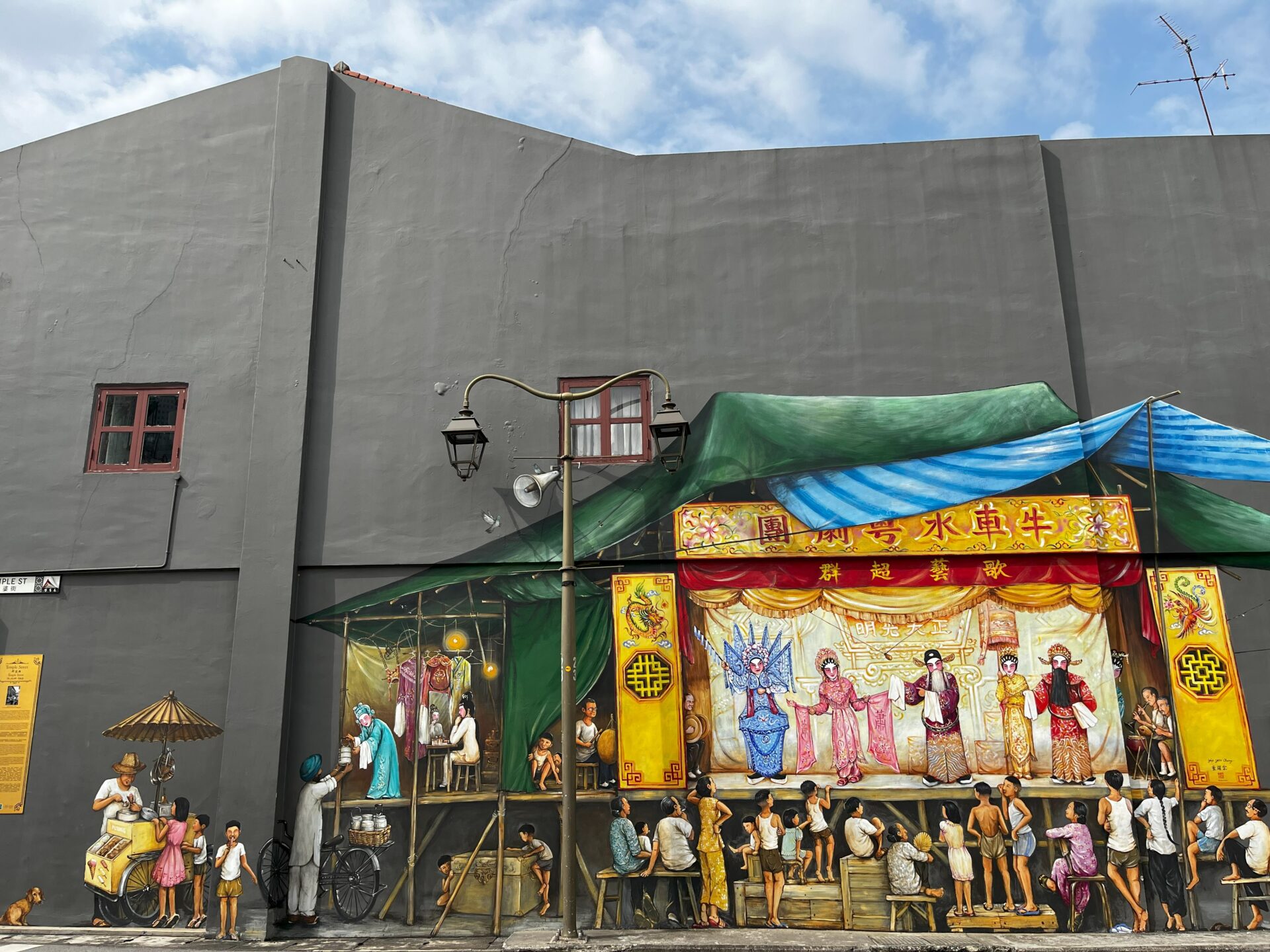
Photo 7: Cantonese opera
Sri Mariamman Temple
The Sri Mariamman Temple is the oldest Hindu temple in Singapore, and it only ended up in Chinatown by chance. It was originally intended to be built alongside other religious buildings in Telok Ayer, where many immigrants first arrived in Singapore.
This temple is absolutely worth a visit. As well as the building itself, there are many detailed and expressive statues of Hindu deities.
Please remember: to enter the temple, you must remove your shoes and wear appropriate clothing. Saris are also available at the entrance for covering shoulders or knees if necessary.
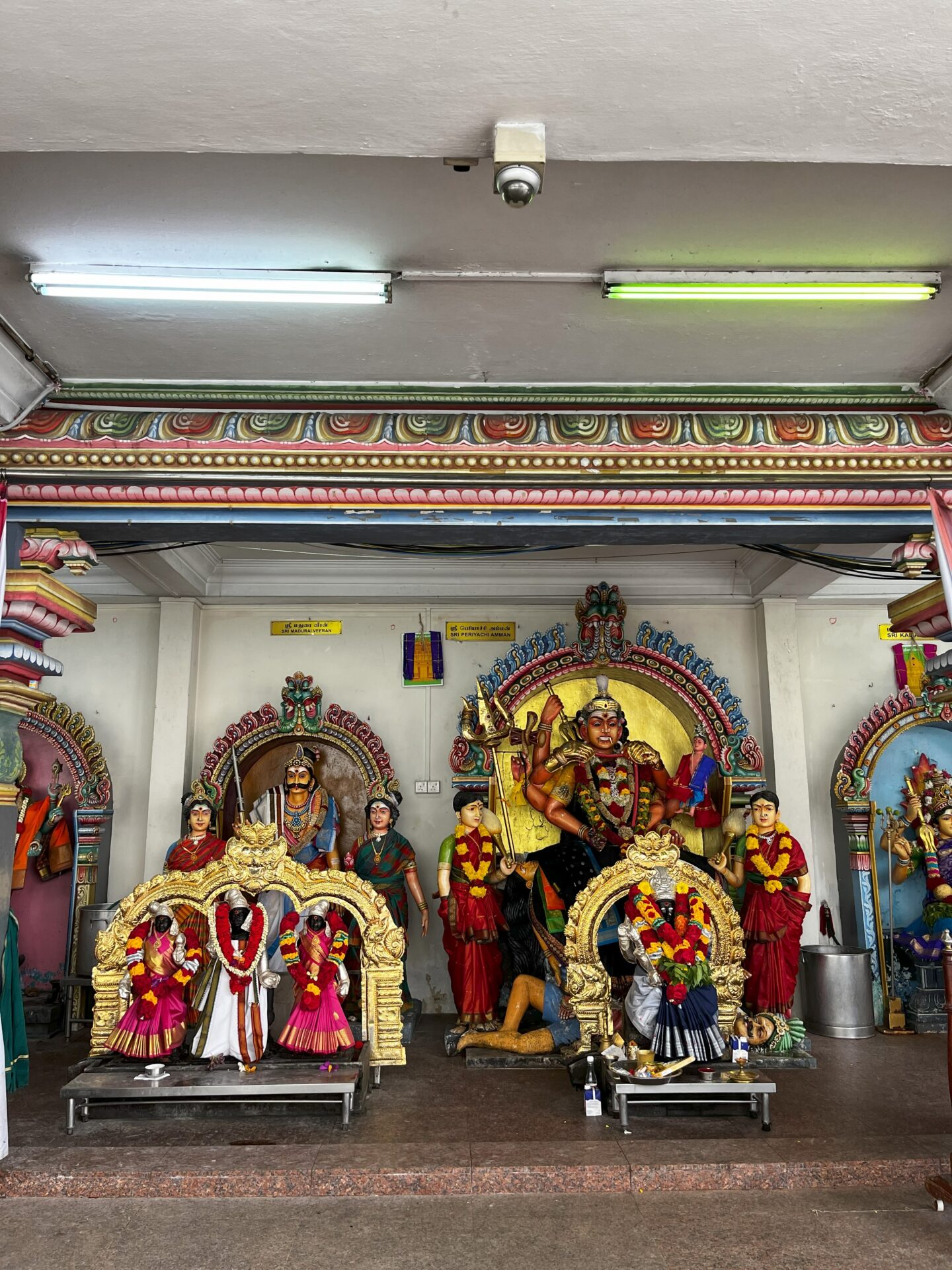
Photo 8: Sri Mariamman Temple
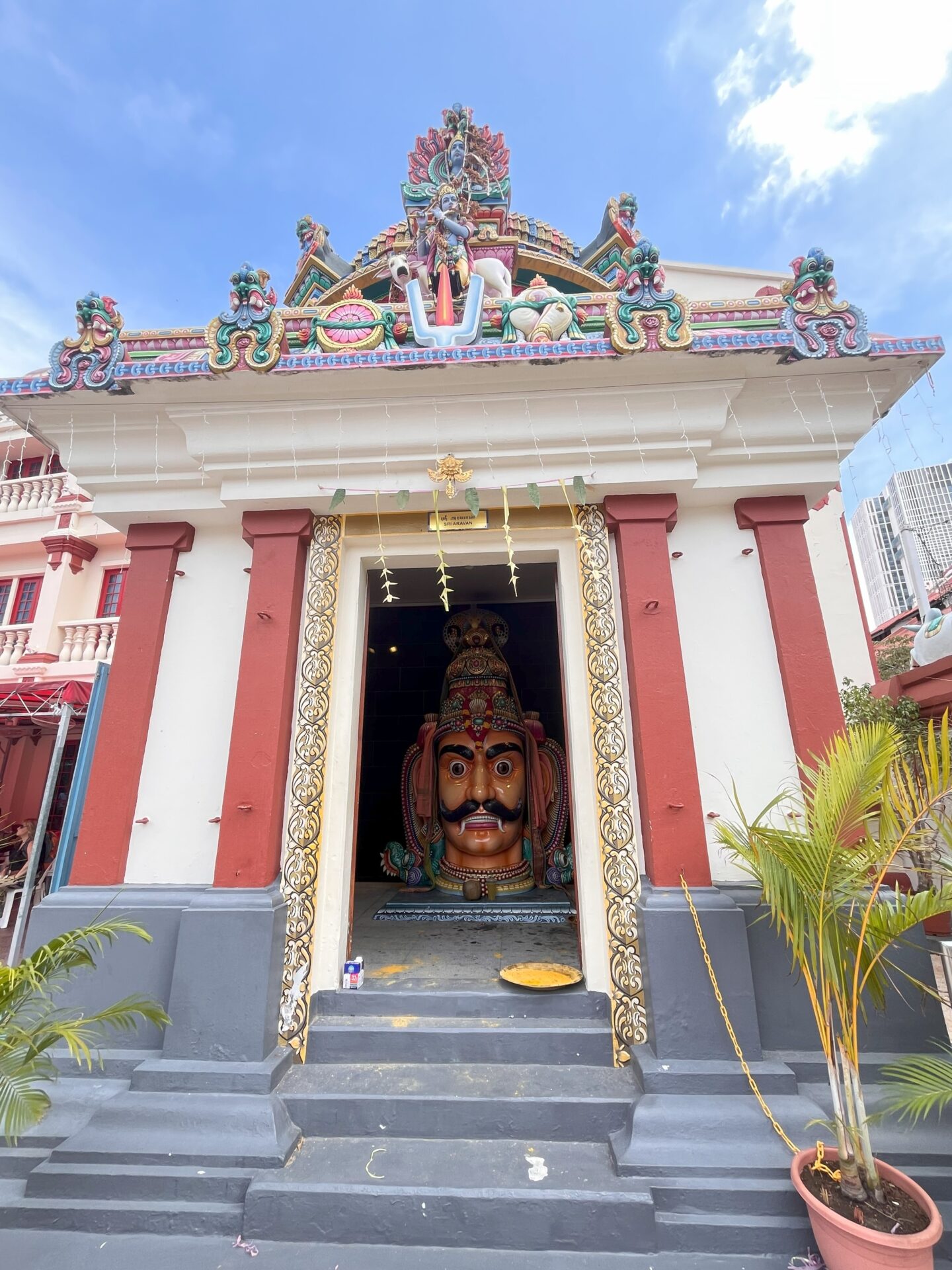
Photo 9: Sri Mariamman Temple
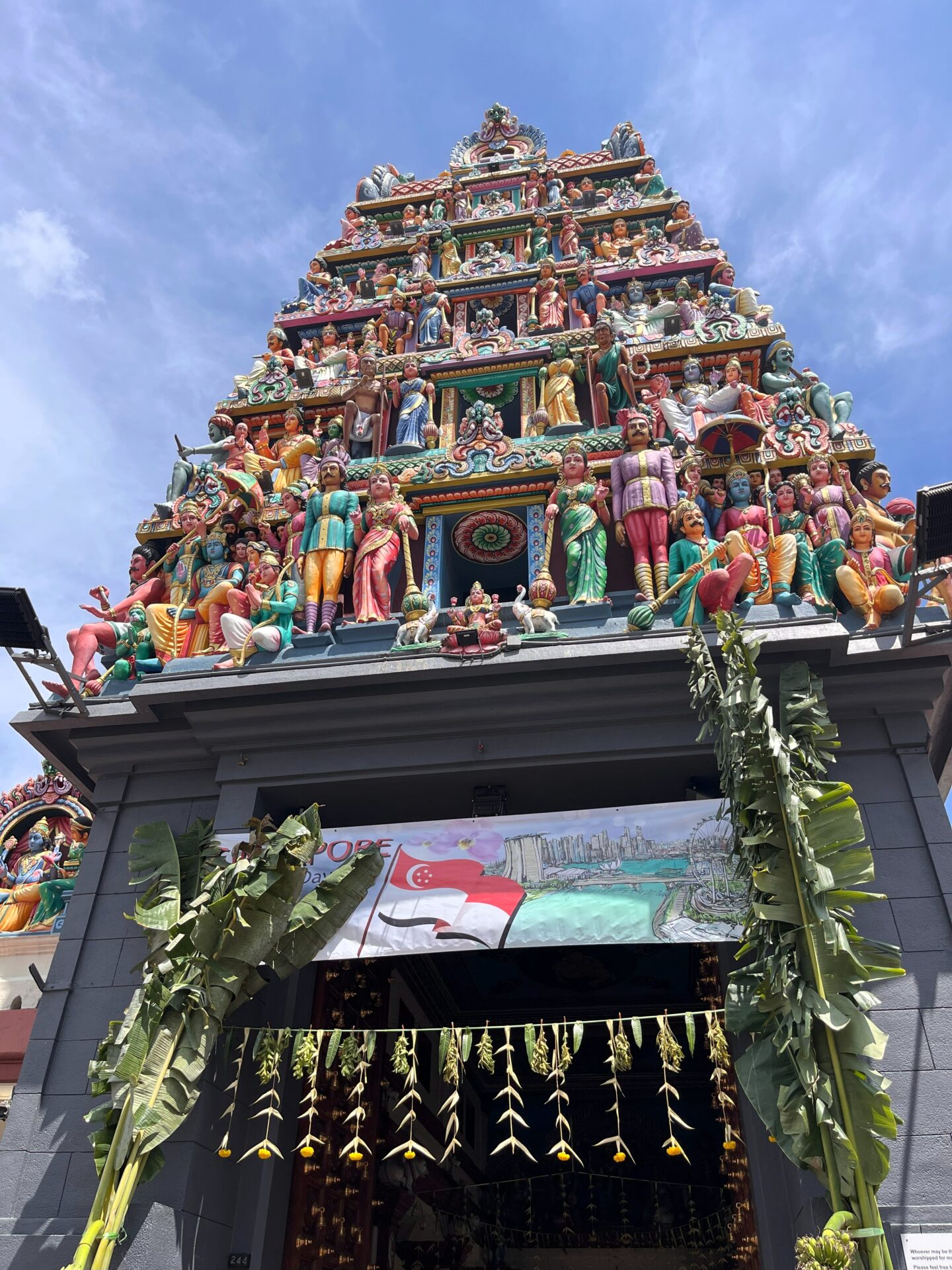
Photo 10: Entrance to the Sri Mariamman Temple
Hawker Centres in Chinatown in Singapore
Hawker centres are food courts filled with stalls selling local and international dishes at very affordable prices. In fact, it’s often cheaper to eat at a hawker centre than to cook at home, and it’s common to see people picking up dinner to take home at the end of the day.
In Chinatown in Singapore, there are several hawker centres that are well worth a visit. I’ll cover them in more detail in my upcoming post Where to Eat in Singapore, but here are my top picks in the area:
The Maxwell food centre is the most touristy of them. It has recently gained huge popularity thanks to high-profile visitors such as Dua Lipa and Lady Gaga, who were performing in Singapore at the time.
Tip: If you don’t mind queueing, be sure to try the famous Tian Tian Hainanese chicken rice. You’ll easily spot it from the long queue, but don’t worry it moves quickly! If you’re in a hurry or don’t want to wait, don’t worry too! There are also other stalls selling Singaporean chicken rice that are just as good!
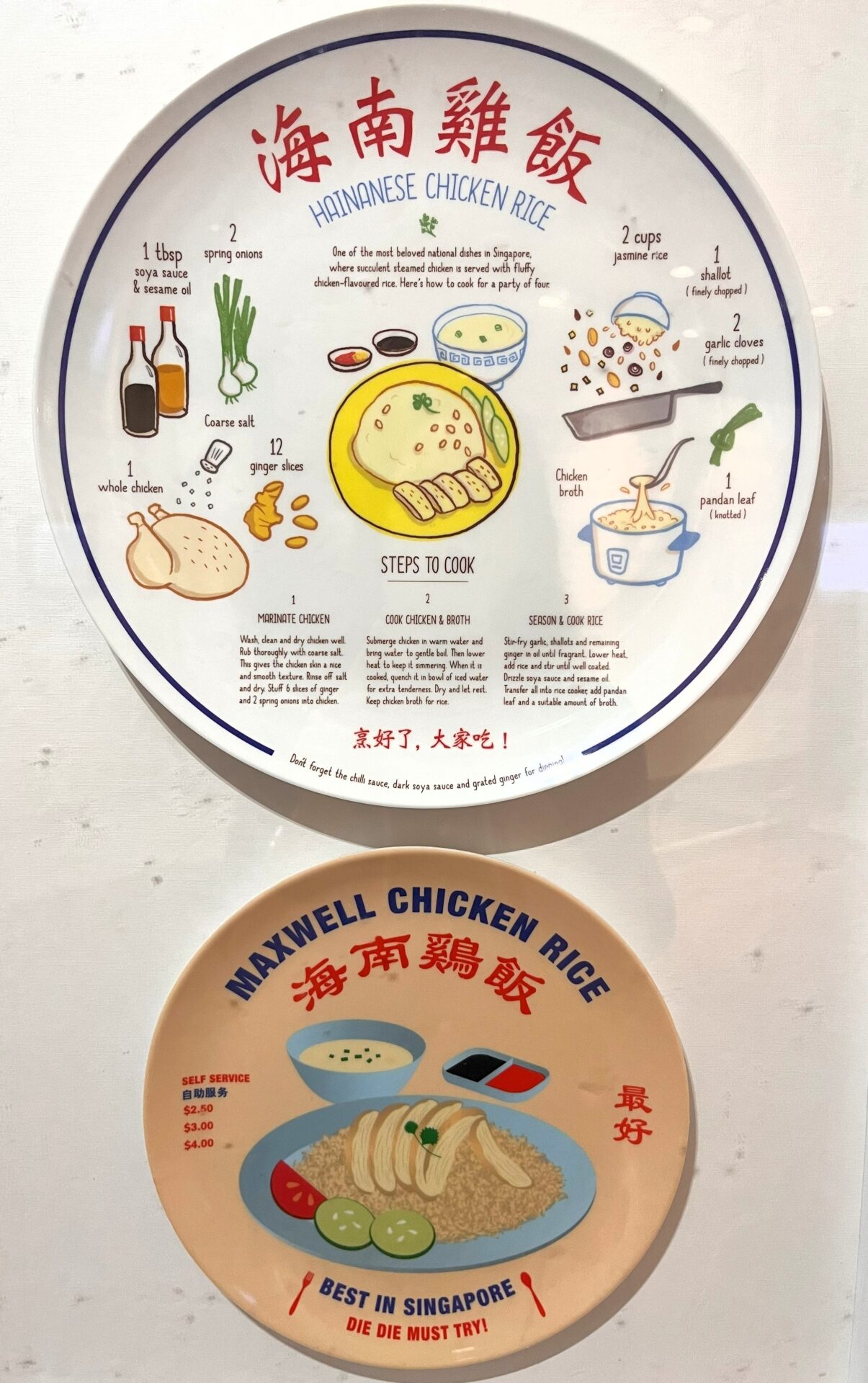
Photo 11: Recipe for the famous Chicken Rice, Singapore’s national dish
The Chinatown Complex more local and authentic than Maxwell. It is also home to a traditional wet market selling fish, meat, fruit and vegetables on the basement level, which is fascinating to explore.
Tip: On the 2nd floor, look out for Ann Chi Popiah (#02-112). Popiah is a type of fresh spring roll filled with shredded vegetables and peanuts. You can choose whether you want it spicy or not. I love it!
Another must-try here is Hawker Chan (#02-126), which is famous for dishes such as Char Siew (Chinese-style roast pork), served with rice or noodles.
Singapore City Gallery, The URA Centre
The Singapore City Gallery is located right next to the Maxwell Food Centre, inside the Urban Redevelopment Authority (URA) building. The URA is the organisation responsible for planning Singapore’s urban development. It’s the perfect place to cool off with some air conditioning while learning more about the city.
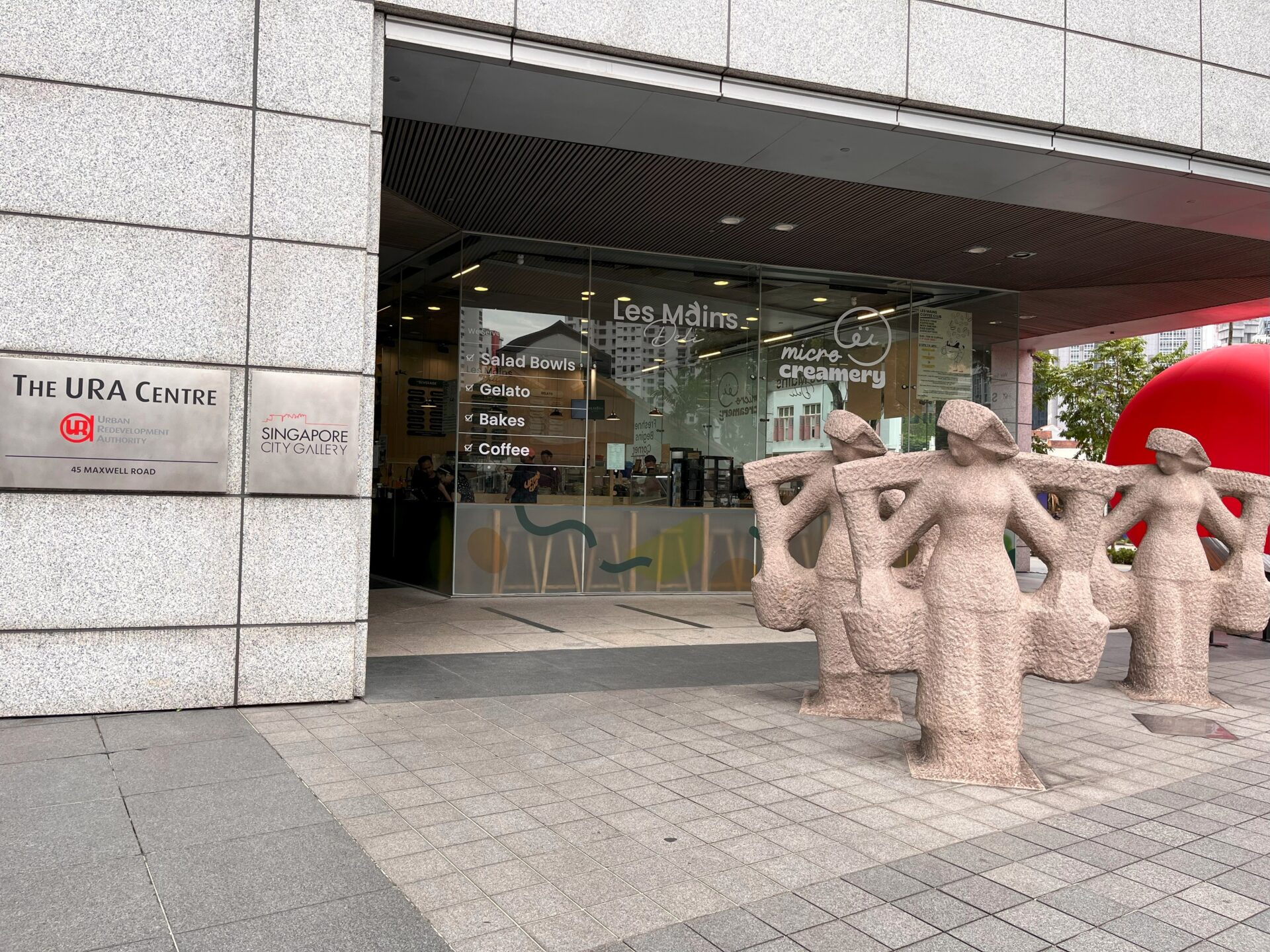
Photo 12: One of the entrances to the Singapore City Gallery building. Sculpture of the ‘Samsui Women,’ women who came from the Samsui province in China to work in construction in Singapore from the second half of the 1930s until the 1960s.
At the entrance, you’ll find a large model of the entire island, and a short film about Singapore is shown every eight minutes.
If you have time, head up to the second floor to see the full exhibition, which showcases Singapore’s urban transformations over the decades. There’s also a section explaining the water treatment course, sustainability, and the complex land reclamation process that has been vital for the city’s expansion.
At the end of the exhibition, don’t miss the detailed scale model of central Singapore, it’s really cool!
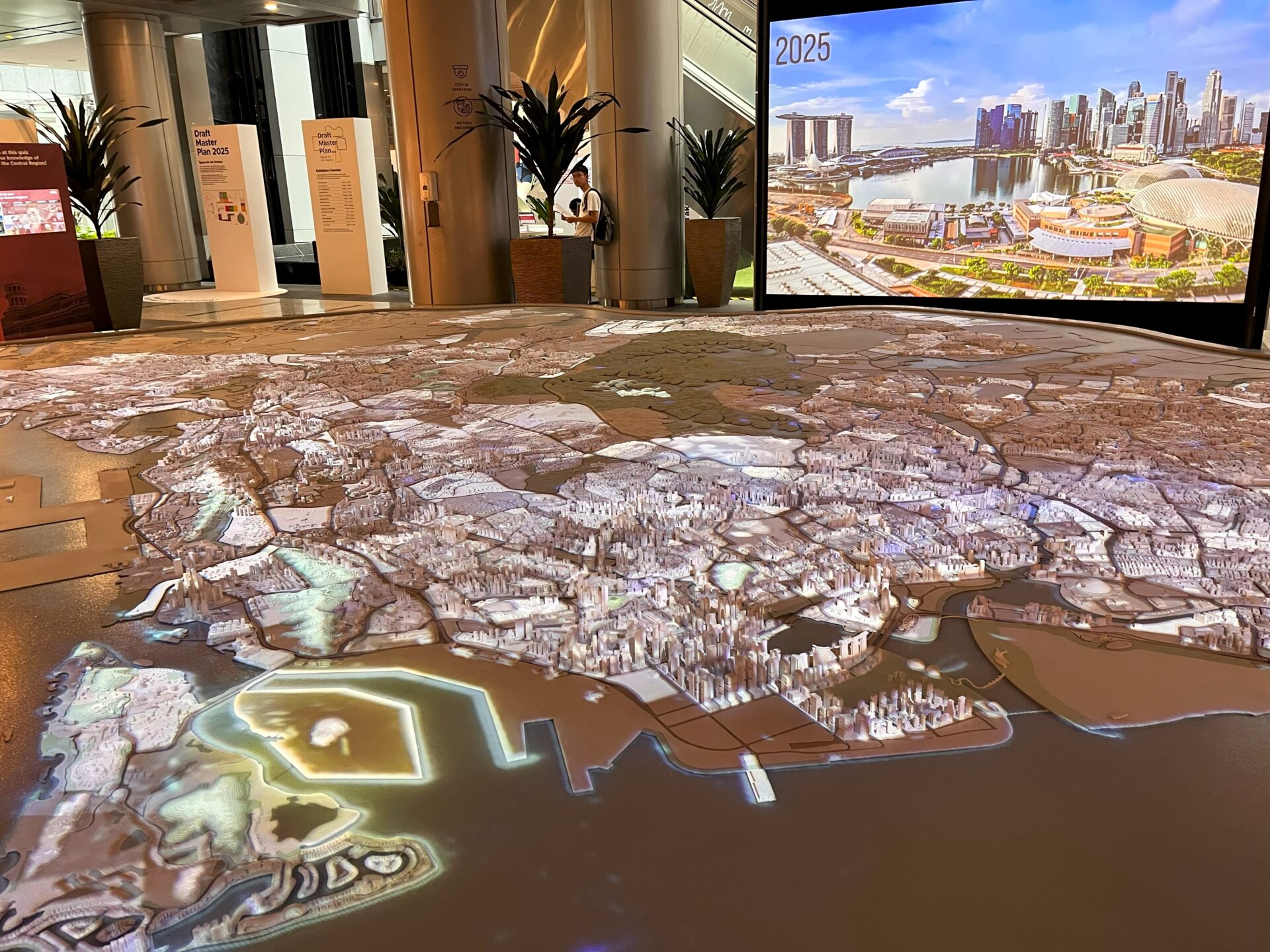
Photo 13: Model of Singapore at the entrance of the Singapore City Gallery
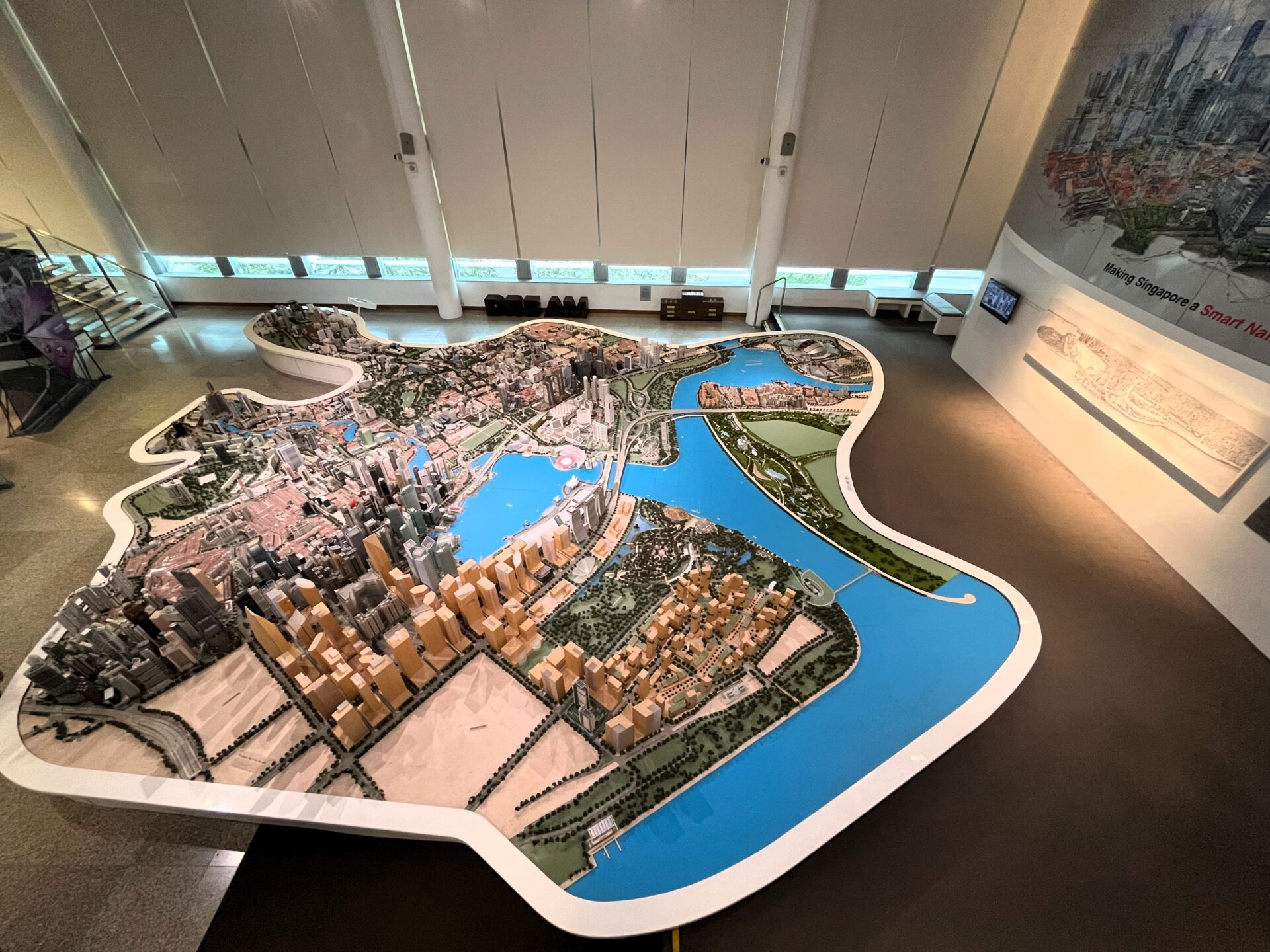
Photo 14: Model of Singapore’s central area on level 2 of the Singapore City Gallery
Thian Hock Keng Temple
Dating back to the 1800s, this temple was built in honour of Mazu, the Chinese goddess of the sea.
Thian Hock Keng Temple is located in Telok Ayer, an area home to other religious places of worship, including a mosque and a Methodist church. The name Telok Ayer means “bay water” in Malay, as the area was once located right by the sea. In the 19th century, many immigrants arrived here by boat, and their first act was to thank the gods for a safe journey and to pray for good fortune in their new lives.
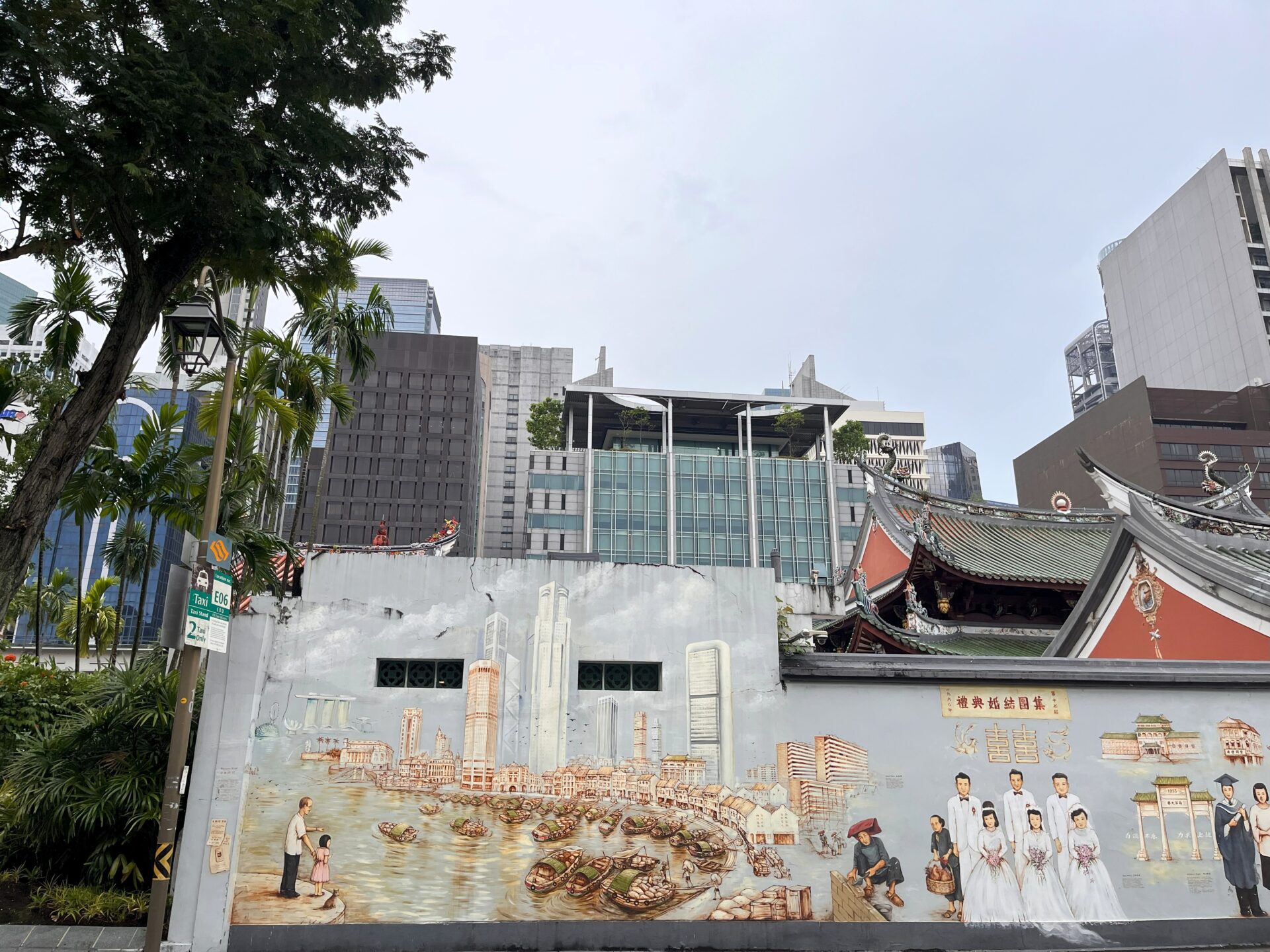
Photo 15: Thian Hock Keng Mural on the exterior wall of the Thian Hock Keng temple
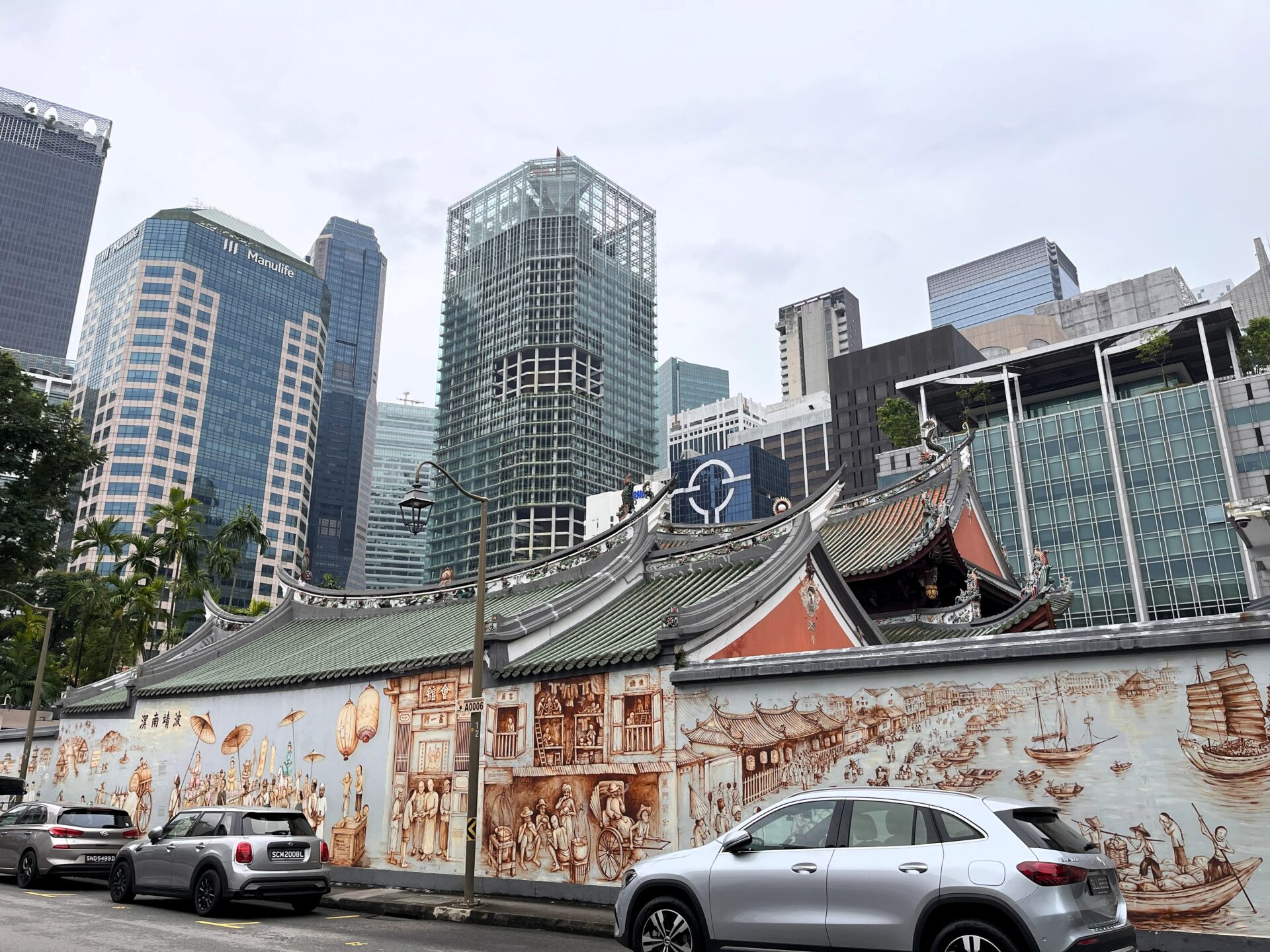
Photo 16: Thian Hock Keng Mural on the exterior wall of the Thian Hock Keng temple
The beautiful temple is considered an architectural gem, especially since it was built without nails. If you look closely at the ceiling beams, you can see how the wood has been carved to fit together perfectly.
It is also rich in traditional Chinese symbolism, featuring dragons, phoenixes, intricate carvings and decorative tiles.
Check the exact location and opening hours here.
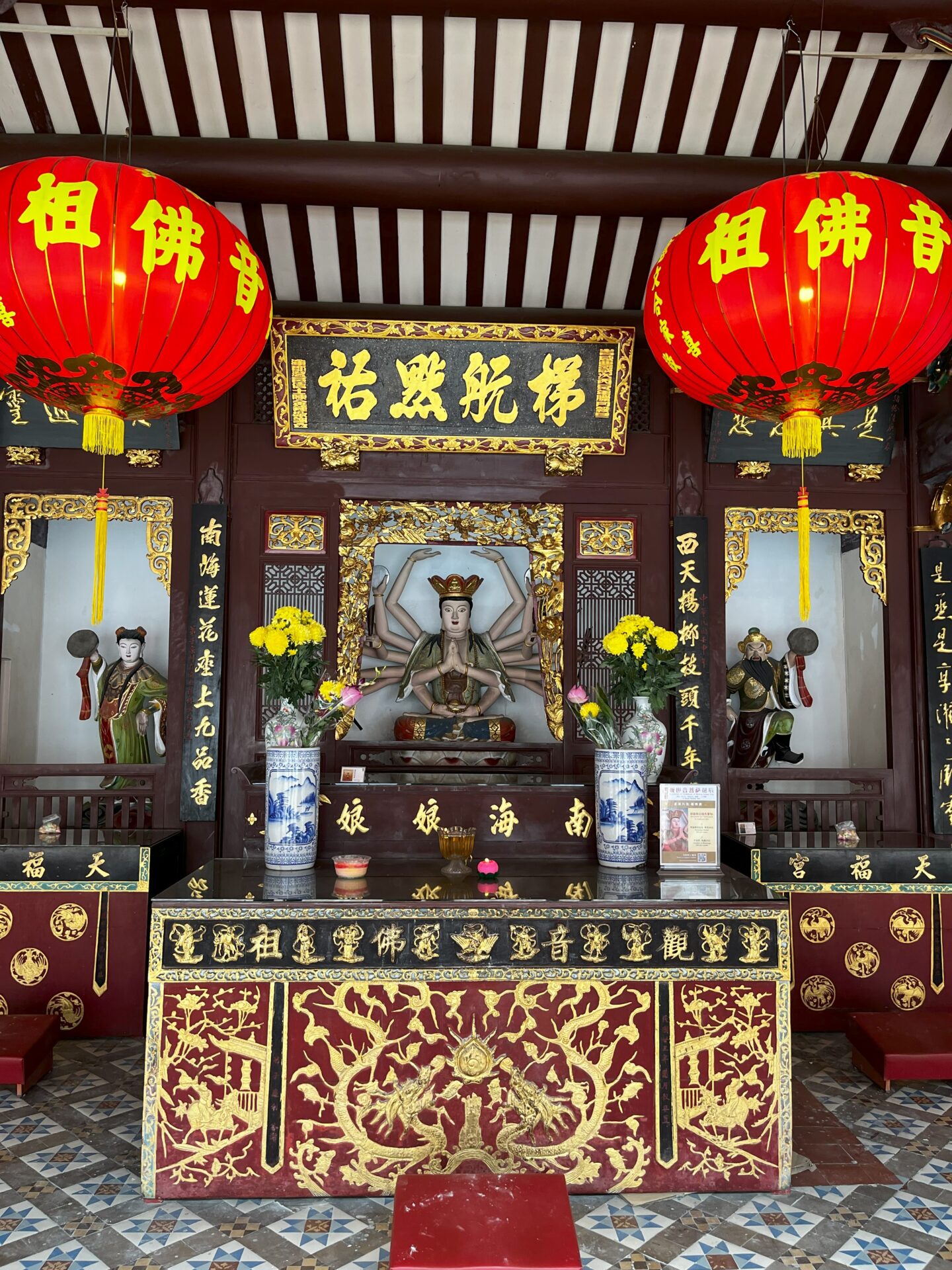
Photo 17: Thian Hock Keng Temple
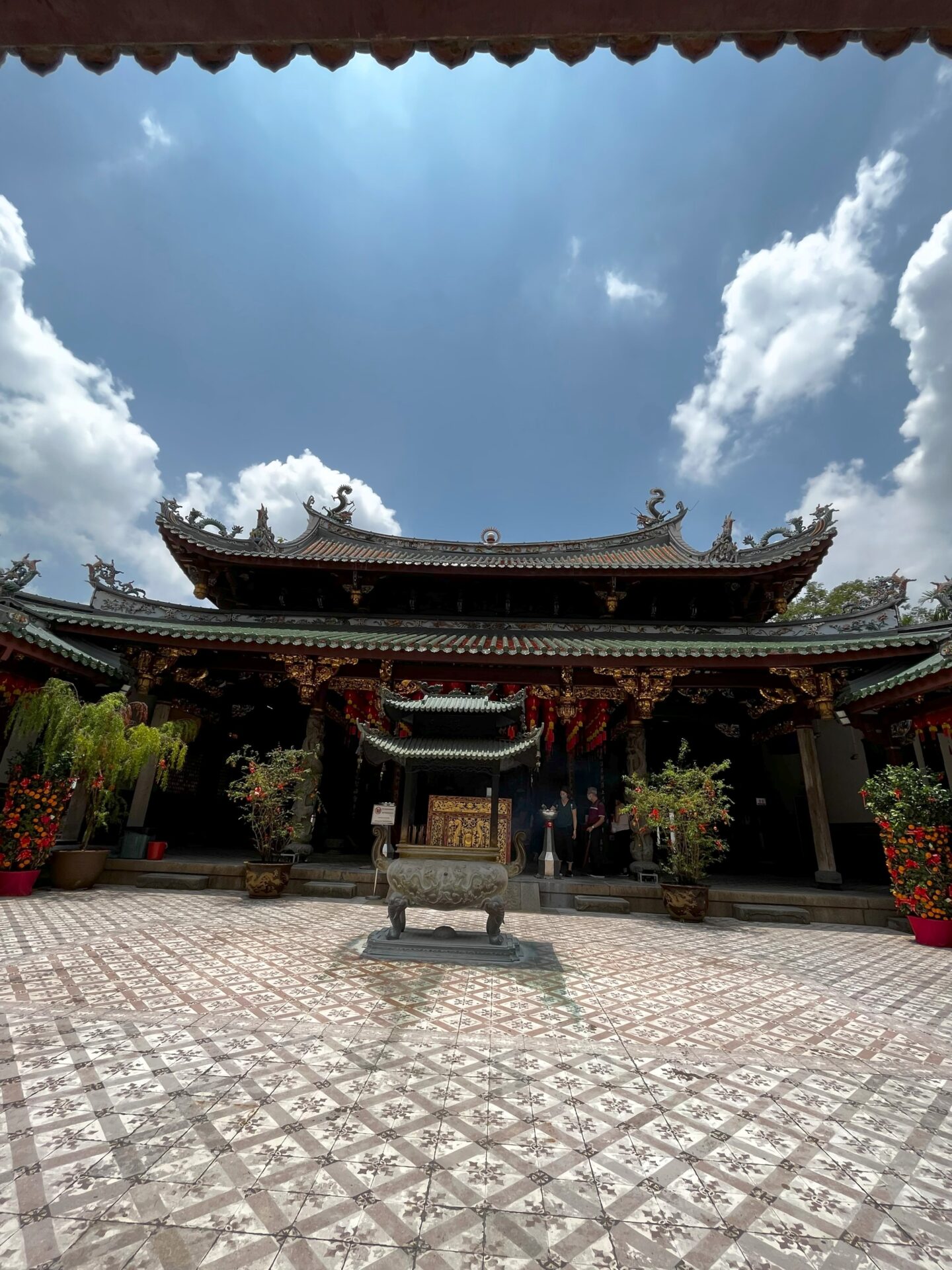
Photo 18: Thian Hock Keng Temple
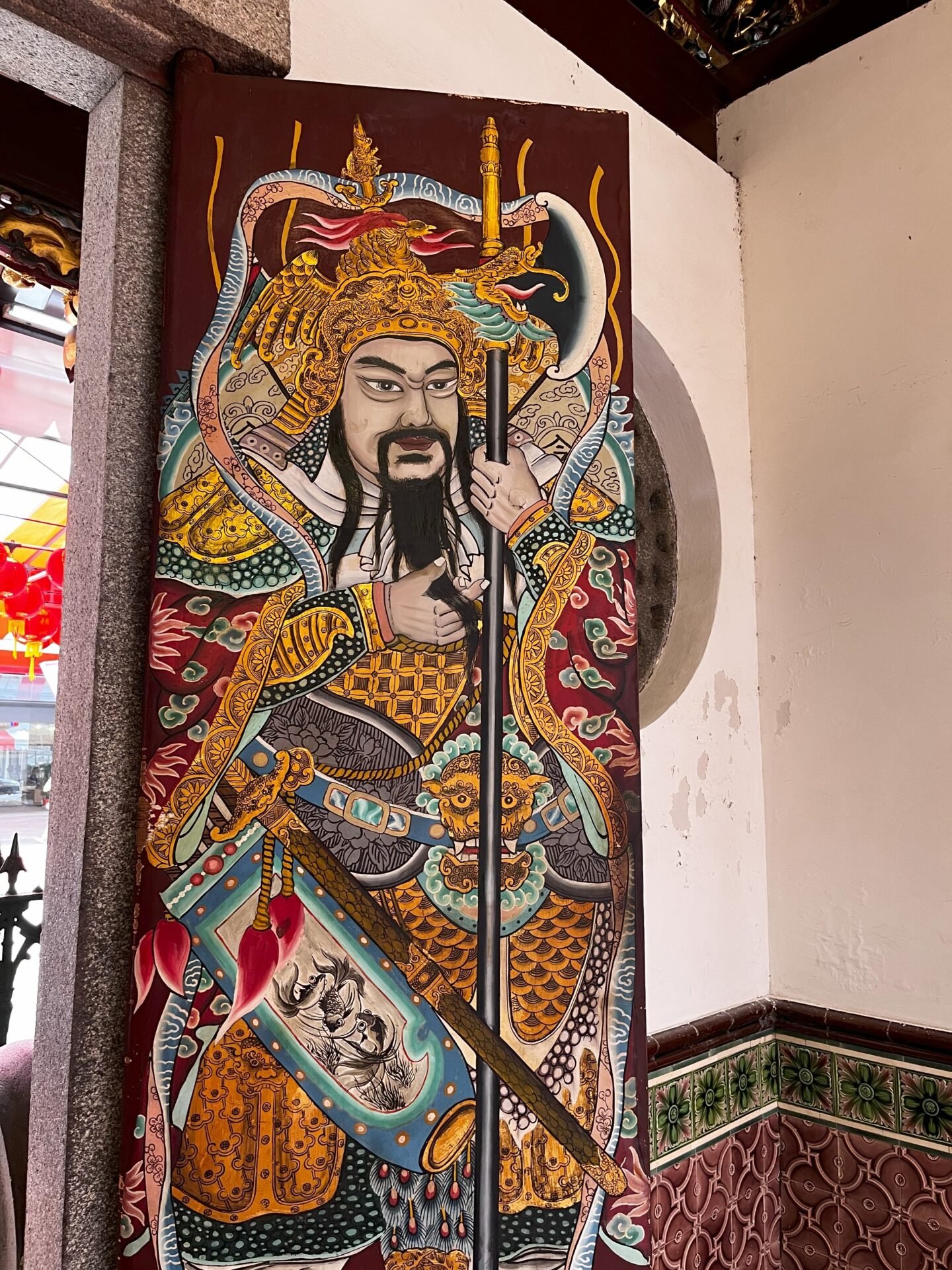
Photo 19: Thian Hock Keng Temple
I hope these tips help you make the most of your visit to Chinatown in Singapore!
Don’t miss my other posts on the city’s cultural districts
As well as:


